
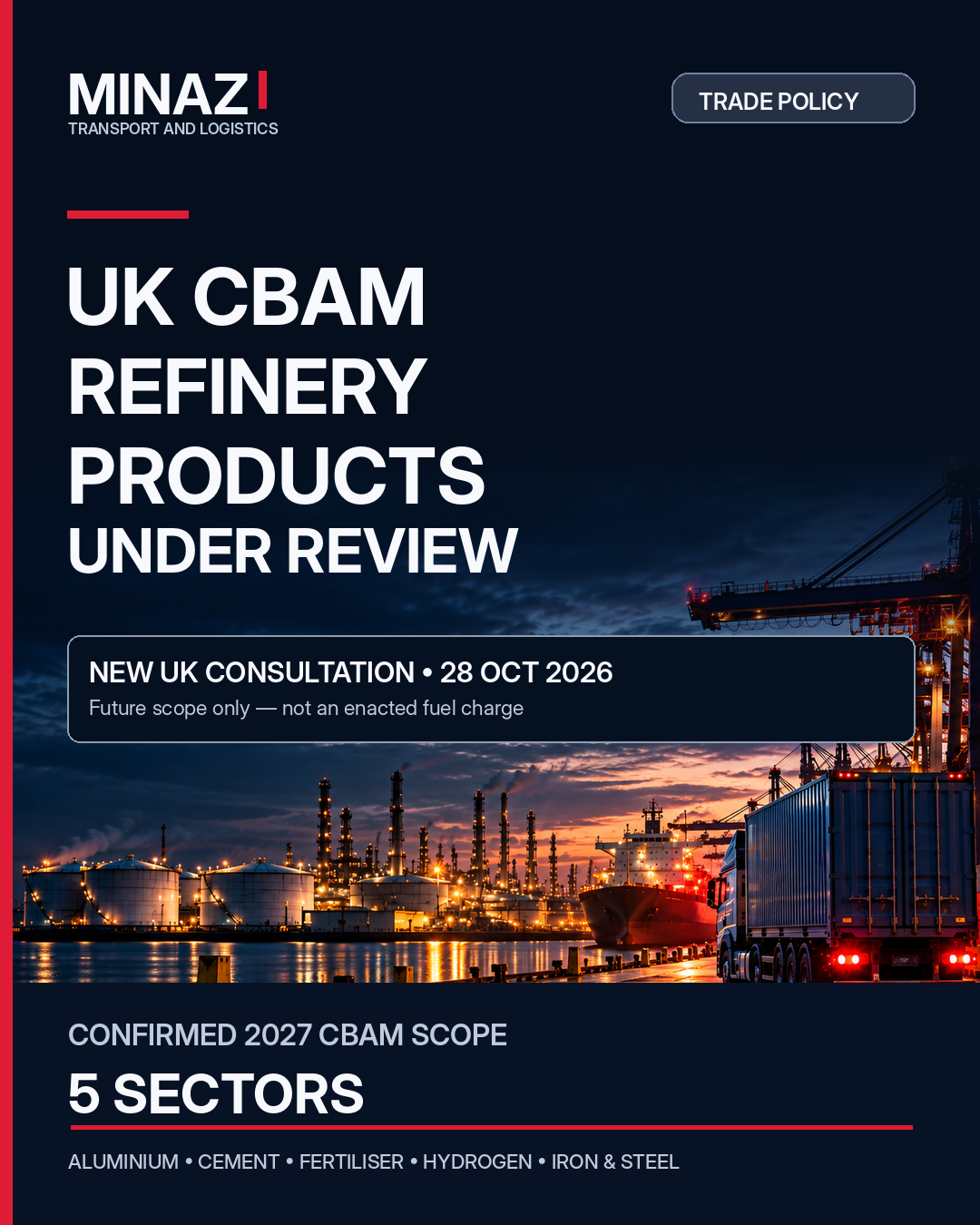
UK CBAM begins on 1 January 2027 for specified aluminium, cement, fertiliser, hydrogen, iron and steel goods. Refinery products are the subject of a separate consultation published on 28 October 2026, not an additional confirmed 2027 category. Identify commodity codes and responsible importers now; monitor the consultation outcome before revising landed-cost assumptions.
What was announced on 28 October
HM Treasury and HM Revenue & Customs published an open consultation examining whether refinery products should be added to the UK Carbon Border Adjustment Mechanism (CBAM) in a future phase. The departments describe this as the next stage of work first signalled at Budget 2025 on the feasibility and effects of extending the mechanism. Importers, their agents and other affected businesses are expressly invited to contribute.
The consultation is a policy-development step. It does not announce that all petroleum or refined-fuel imports are already liable for CBAM, and the departments have not confirmed in the consultation landing announcement a new start date for a refinery-product levy. Freight quotations and customs release plans should not present the potential extension as a tax currently in force.
Keep the confirmed 2027 CBAM rules separate
The currently confirmed UK CBAM begins on 1 January 2027 and applies to specified imported goods from five sectors: aluminium, cement, fertiliser, hydrogen, and iron and steel. Scope is product-specific, determined by the official commodity-code list—not merely by the seller's industry or the description on a logistics booking. HMRC's policy material identifies a £50,000 value threshold for specified CBAM goods over a rolling 12-month period as part of the registration framework.
Refinery products are not on that confirmed five-sector list. Similarly, earlier planning documents that mentioned glass and ceramics do not mean they are included at launch: the government later excluded those two sectors from the January 2027 starting scope. A reliable shipment-screening process needs the current code-level rules, not an older headline about proposed sectors.
Why refinery products matter to freight flows
Refinery products can move through maritime terminals, storage sites and inland distribution networks, and their importers can have different commercial and customs arrangements. A future scope extension might require new information on the goods' origin, production-related emissions or carbon-pricing evidence. The precise product list, treatment and compliance design remain questions for the consultation and any later legal decisions.
For freight forwarders, the immediate task is coordination rather than deciding tax liability. Identify the legal importer, customs declarant, commodity code and contractual owner of supporting data. A haulier's presence on a booking or a ship's bill of lading is not, by itself, evidence that the transport operator is the party liable for a future carbon tax.
What to verify on a live import booking
First, ask the importer or customs agent to confirm the commodity classification at the level needed for the official UK tariff and CBAM product list. Next, record the country of origin, the importer of record, the planned import date and any documented exceptions relevant to the confirmed scheme. Keep a clear distinction between current legally required customs evidence and information gathered voluntarily to anticipate a possible future policy.
For companies already trading in confirmed CBAM sectors, review exposure to the January 2027 rules independently of this refinery consultation. Agree who collects available product and emissions data from overseas suppliers, who checks the UK importer's liability and registration position, and who controls the customs/finance hand-off. Do not hold otherwise compliant refinery shipments solely because a consultation has opened.
How CBAM rates will work for goods actually in scope
HMRC's rates guidance, issued 16 October 2026, states that CBAM charges for covered goods depend on their sector, the embodied emissions and the quarter of import. The rates are designed to reflect the effective UK carbon price and will change quarterly; HMRC plans to publish quarter-specific rates from 1 January 2027.
These published principles describe the confirmed CBAM regime. They should not be extrapolated into a guessed price per litre of diesel, aviation fuel or another refinery product. The consultation may result in a different final product scope or timing, or no extension. Avoid inserting hypothetical CBAM amounts into customer invoices as if they were statutory charges.
A disciplined watchlist for UK–EU supply chains
A proportionate internal watchlist has four fields: the commodity codes the business actually imports, the named importer or agent responsible, the available manufacturing and carbon-pricing documentation, and the date on which the UK government gives a definitive policy update. For regular movements, add a note to contract-review and annual-pricing calendars rather than changing every individual delivery instruction now.
European suppliers should be informed that the UK CBAM is a separate UK mechanism, even if their organisations also prepare data for EU carbon-border requirements. Product codes, thresholds, timing and reporting processes should be checked against the relevant jurisdiction rather than assumed identical. This avoids duplicated document requests and reduces the risk of misclassifying international shipments.
What to do next
Importers and trade associations that may be affected can review the 28 October consultation and submit evidence using HMRC/HM Treasury's official channels. Companies not trading in refinery products should continue their ordinary CBAM readiness work for the five confirmed sectors, if applicable. The consultation does not create a reason to claim a new legal deadline on a shipment today.
For booking desks, the useful message to customers is simple: confirm the actual importer and commodity code; keep supplier technical data accessible; and recheck the law when a formal response or legislative change is published. Until then, the current customs declaration and transport obligations remain the operational reference point.